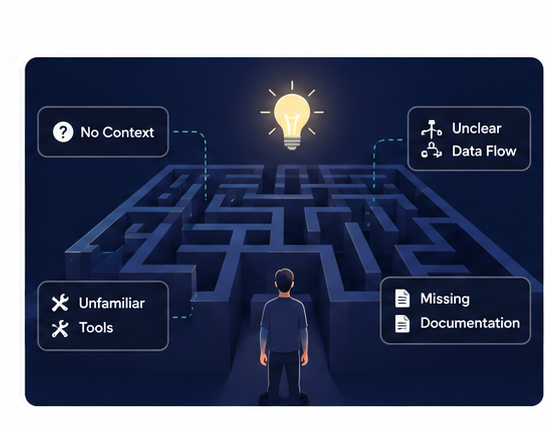
One of the biggest misconceptions in data engineering is this:
experienced engineers already know everything inside a system.
In reality, most experienced engineers regularly work with unfamiliar systems.
New projects.
New clients.
New architectures.
New pipelines.
New naming conventions.
New tools.
The difference is not that experienced engineers know every system.
The difference is that they know how to explore systems without panicking.
Beginners often try to understand everything immediately.
That usually creates more confusion.
Experienced engineers usually do the opposite.
They simplify the exploration process.
For example, when entering a new project, they first try to identify a few core things:
- where data enters
- where data is stored
- how pipelines are triggered
- what the critical tables are
- what downstream systems depend on
- where failures are monitored
- how historical loads are handled
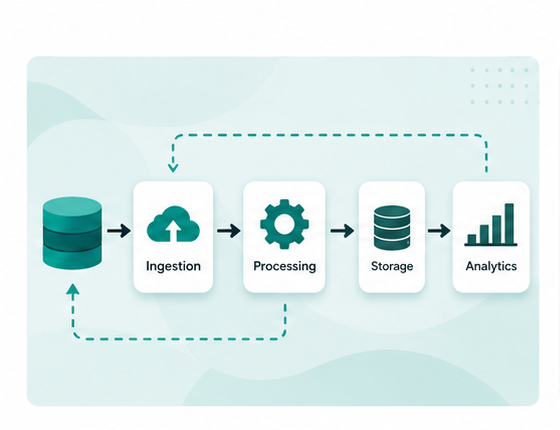
Instead of reading everything, they trace flows.
This is extremely important.
Because real engineering systems are interconnected.
Trying to understand every component individually often creates information overload.
Tracing a single business flow is usually more effective.
For example:
Customer order created
→ raw ingestion
→ validation
→ enrichment
→ warehouse load
→ dashboard/report/API consumption
Suddenly the system starts becoming understandable.
Another important thing experienced engineers do is this:
they become comfortable not knowing everything immediately.
This reduces anxiety significantly.
Many learners think confusion means incompetence.
In reality, confusion is a natural part of exploring large systems.
Even senior engineers spend weeks understanding production environments.
The key skill is not instant understanding.
The key skill is structured exploration.
Over time, unfamiliar systems stop feeling intimidating.
You start recognizing common patterns across companies:
- ingestion layers
- orchestration
- retries
- monitoring
- transformations
- audit tracking
- warehouse modeling
And slowly, engineering confidence develops naturally.