
Included in Data0to1 Project Library
See the project files, architecture flow, execution steps, and final cloud output before you start building.
Healthcare applications store day-to-day data such as patients, providers, encounters, diagnoses, medications, vitals, allergies, and discharge information inside operational databases.
But analytics teams should not directly depend on the application database for reporting. In real projects, this data is usually moved into a data lake first, where it can be stored safely, queried, and reused by downstream pipelines.
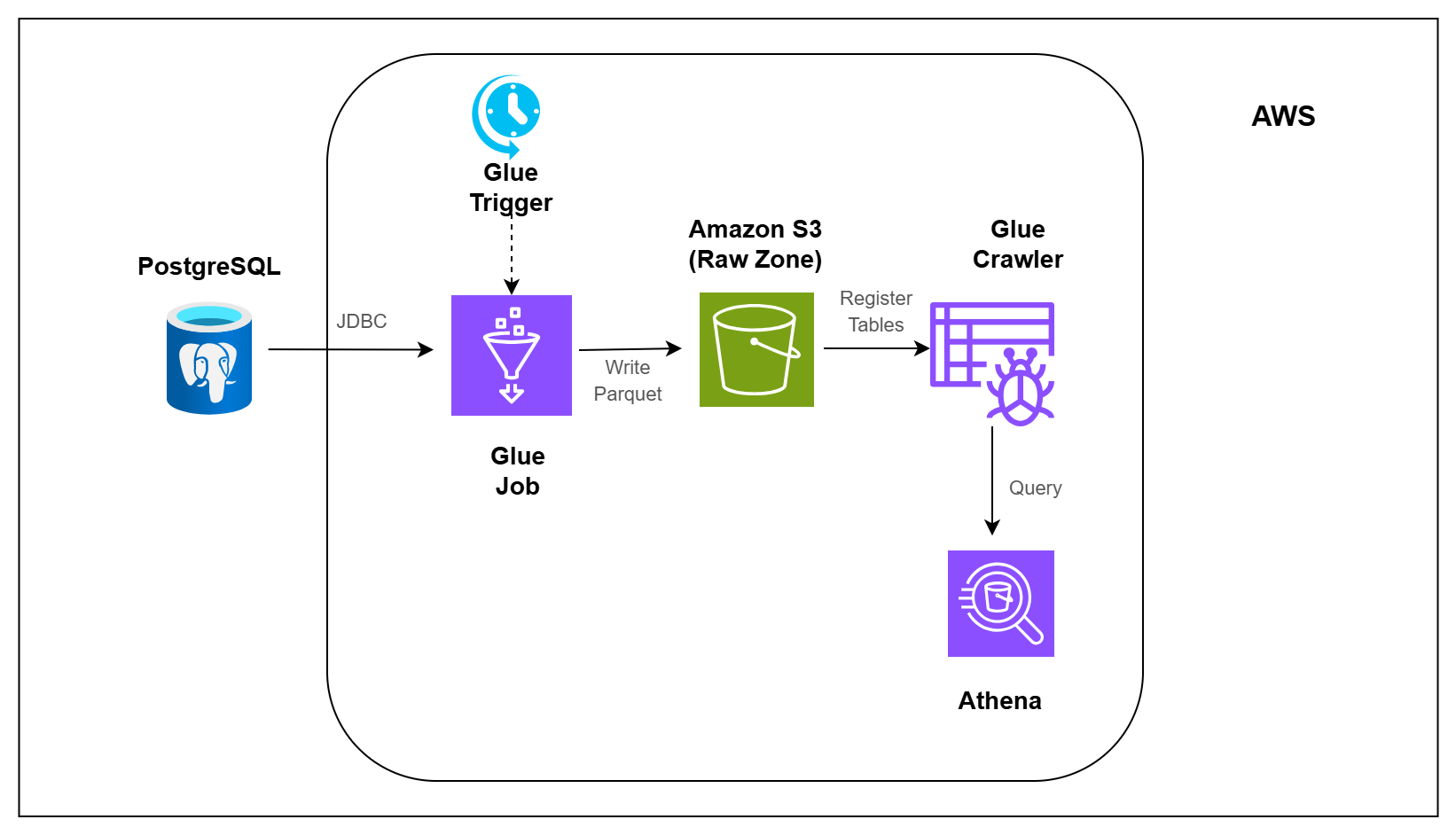
In this pipeline, you will load healthcare data from PostgreSQL into Amazon S3 using AWS Glue. You will store the data as Parquet files, catalog it for Athena querying, and schedule the ingestion so the pipeline can run repeatedly instead of as a one-time load.
After completing this pipeline, you will be able to:
Get access to the project code, setup files, architecture walkthrough, implementation videos, and support.