Included in Data0to1 Project Library
Vendor data often arrives as files instead of database records.
Banks, payment processors, settlement partners, fraud providers, and external vendors may deliver CSV or similar files on a daily, weekly, or monthly schedule. Before this data can be used by downstream pipelines, each file should be collected, validated, tracked, archived, and stored in a central data lake.
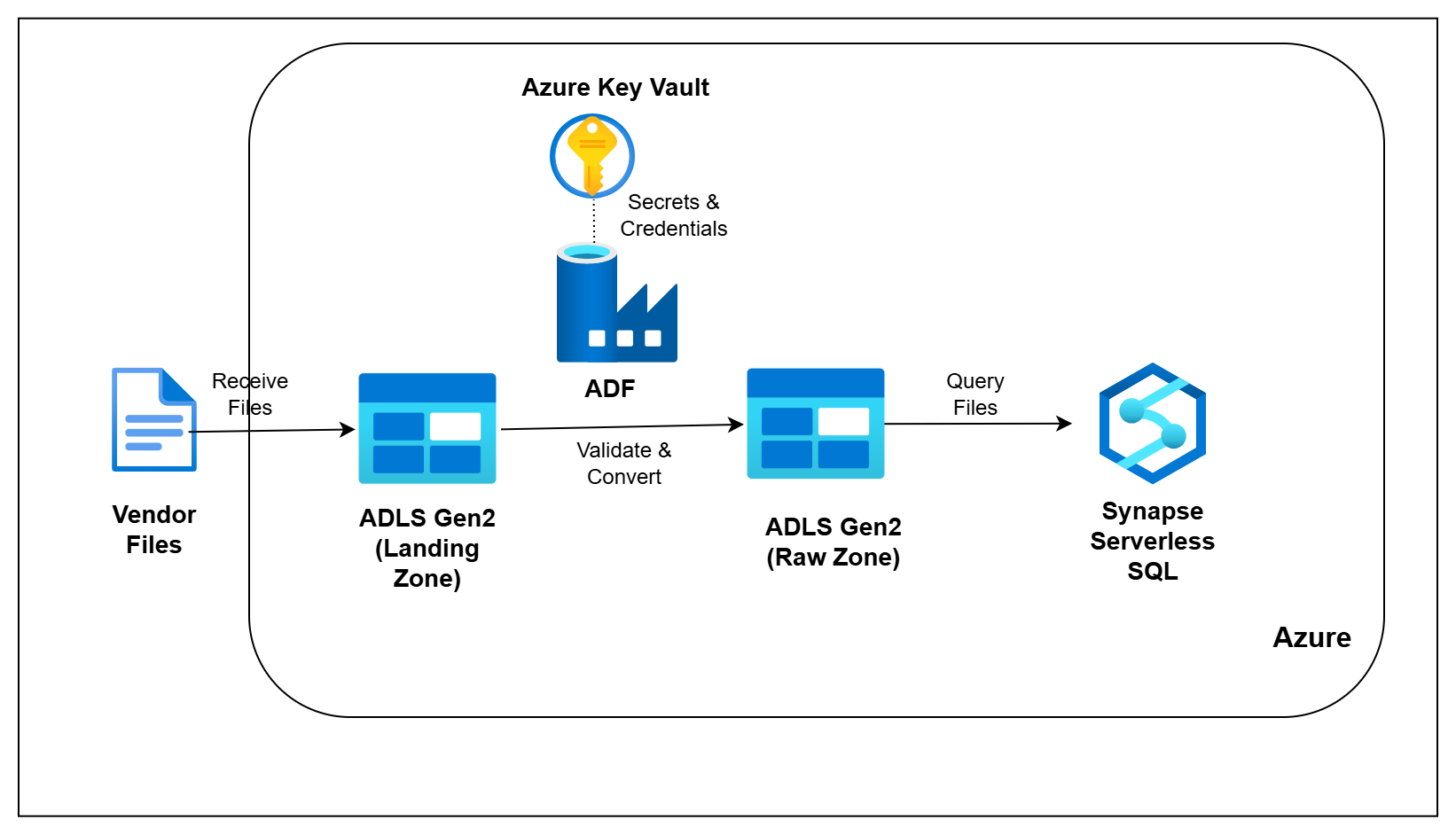
In this pipeline, you will build a vendor file ingestion process on Azure. You will receive vendor files in ADLS Gen2, validate and convert them using Azure Data Factory, track delivery metadata, prevent duplicate processing, and make the ingested data available for validation using Synapse Serverless SQL.
After completing this pipeline, you will be able to:
Get access to the project code, setup files, architecture walkthrough, implementation videos, and support.