
Event Streams → Real-Time Monitoring

Azure • Streaming • Advanced • Payments

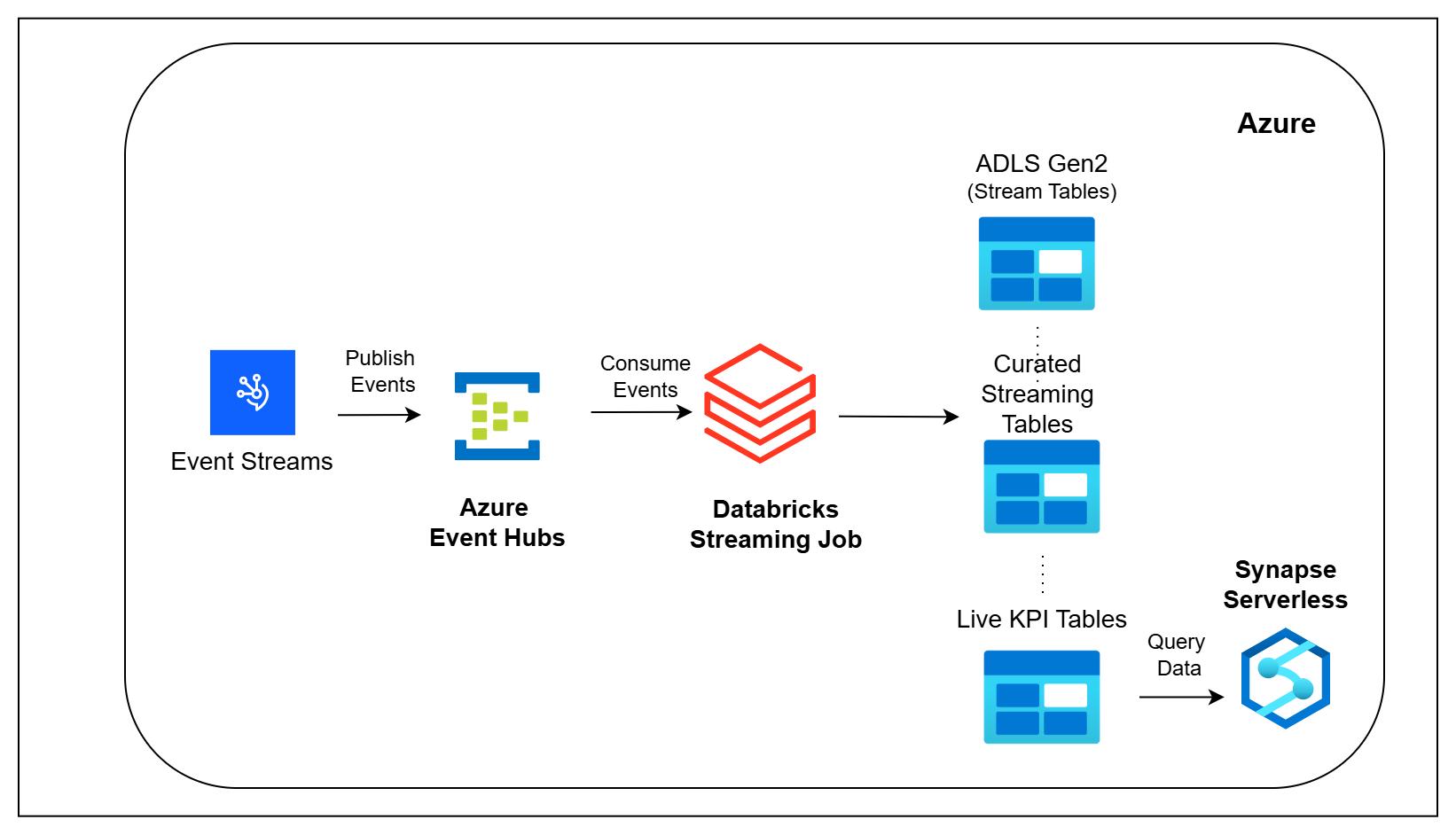
Architecture Diagram

Overview

Capturing events is only the first step in a streaming architecture.

Business teams often need to monitor transactions as they happen, identify high-risk activity, track success rates, measure processing latency, and detect operational issues before they affect customers.

In this pipeline, you will build the real-time monitoring layer.

You will process event streams from Event Hubs, archive raw events, create curated streaming tables, handle invalid records, and generate live metrics that can be used by operations, risk, and support teams.

What You Will Build

  • Capture payment events as they happen
  • Store raw events for future analysis and troubleshooting
  • Organize streaming data into trusted business tables
  • Separate bad records from valid events
  • Maintain the latest view of transactions
  • Track transaction success and failure trends
  • Monitor processing delays and retry activity
  • Identify high-risk transactions as they occur
  • Monitor the quality of incoming event data
  • Explore real-time metrics using Synapse

Tech Stack

Azure Event Hubs • Azure Databricks Structured Streaming • Delta Lake • ADLS Gen2 • Synapse Serverless SQL • Python

Learning Outcomes

After completing this pipeline, you will be able to:

  1. Process event streams using Databricks Structured Streaming
  2. Archive raw events for audit and troubleshooting
  3. Organize raw events into trusted business tables
  4. Handle invalid events without disrupting processing
  5. Maintain current-state views from event streams
  6. Build real-time monitoring metrics
  7. Identify high-risk transactions from streaming data
  8. Explore streaming outputs using Synapse Serverless SQL
  9. Understand how streaming platforms support real-time monitoring