
Real-Time Event Processing on AWS

AWS • Streaming • Intermediate • Healthcare

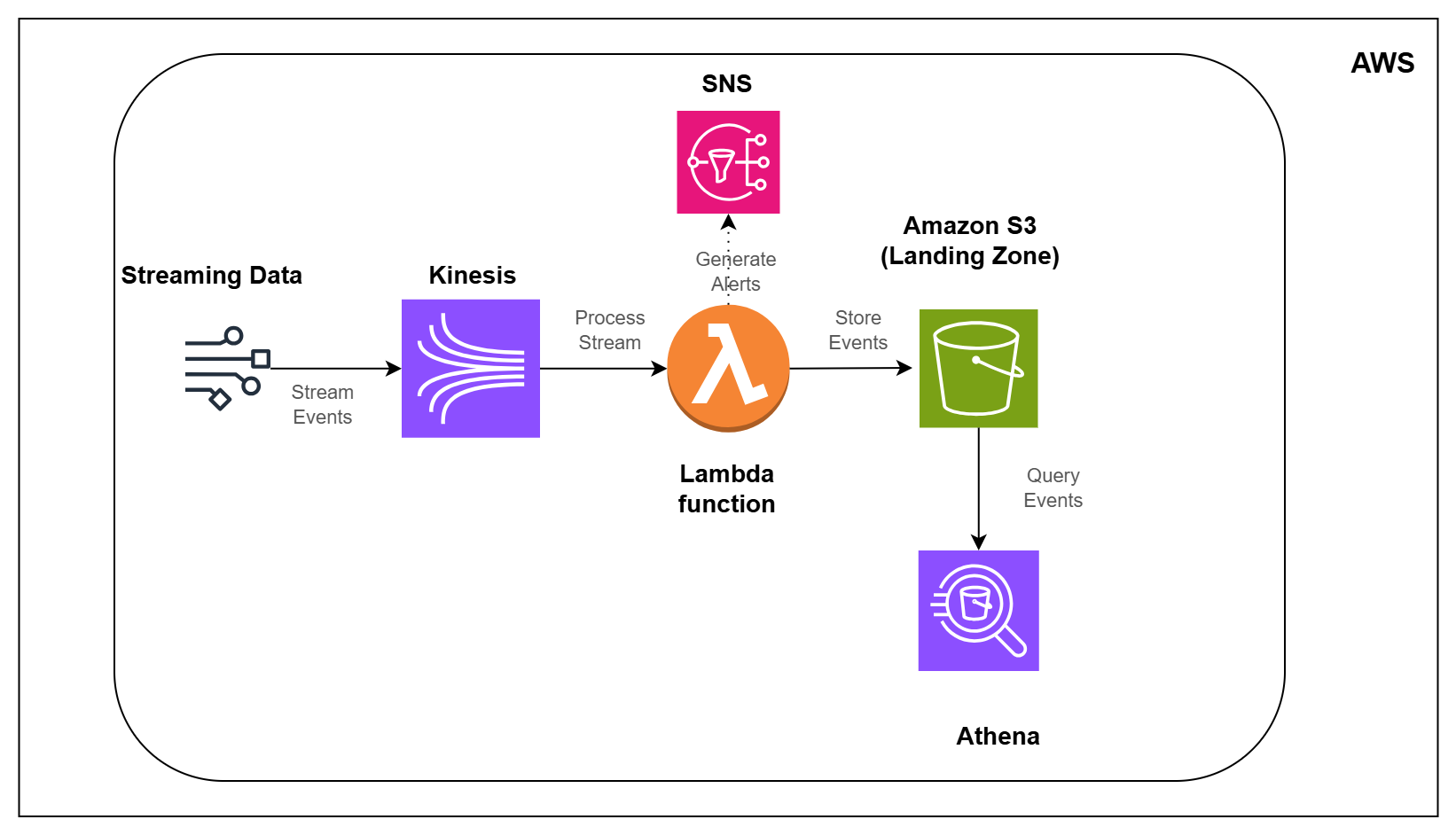
Architecture Diagram

Overview

In healthcare systems, patient vitals such as heart rate, oxygen level, temperature, respiratory rate, and blood pressure can arrive continuously from bedside monitors or clinical applications.

This type of data cannot always wait for a daily batch pipeline. Some events need to be captured quickly, checked for quality, and evaluated for possible alerts.

In this pipeline, you will build a real-time clinical telemetry pipeline.

You will send patient vitals events into a streaming service, process them using AWS Lambda, store valid events in Amazon S3, separate bad records into a DLQ area, and create alert records when vitals cross defined thresholds.

What You Will Build

  • Generate sample patient vitals events
  • Send real-time vitals events into a streaming pipeline
  • Process incoming events using AWS Lambda
  • Store valid vitals data in Amazon S3
  • Capture invalid or incomplete records separately
  • Create alert records for abnormal vitals
  • Organize landing, alert, and DLQ data in S3
  • Query vitals, alerts, and data quality results using Athena
  • Optionally send high-severity alerts using SNS

Tech Stack

Amazon Kinesis • AWS Lambda • Amazon S3 • Amazon Athena • Amazon SNS • AWS IAM • Python • NDJSON

Learning Outcomes

After completing this pipeline, you will be able to:

  1. Build a real-time event ingestion pipeline on AWS
  2. Process streaming healthcare events using Lambda
  3. Validate incoming JSON events before storing them
  4. Separate valid records, bad records, and alert records
  5. Store streaming data in Amazon S3 for later analysis
  6. Query streaming outputs using Athena
  7. Create simple rule-based alerts from event data
  8. Understand how streaming pipelines differ from batch and CDC pipelines